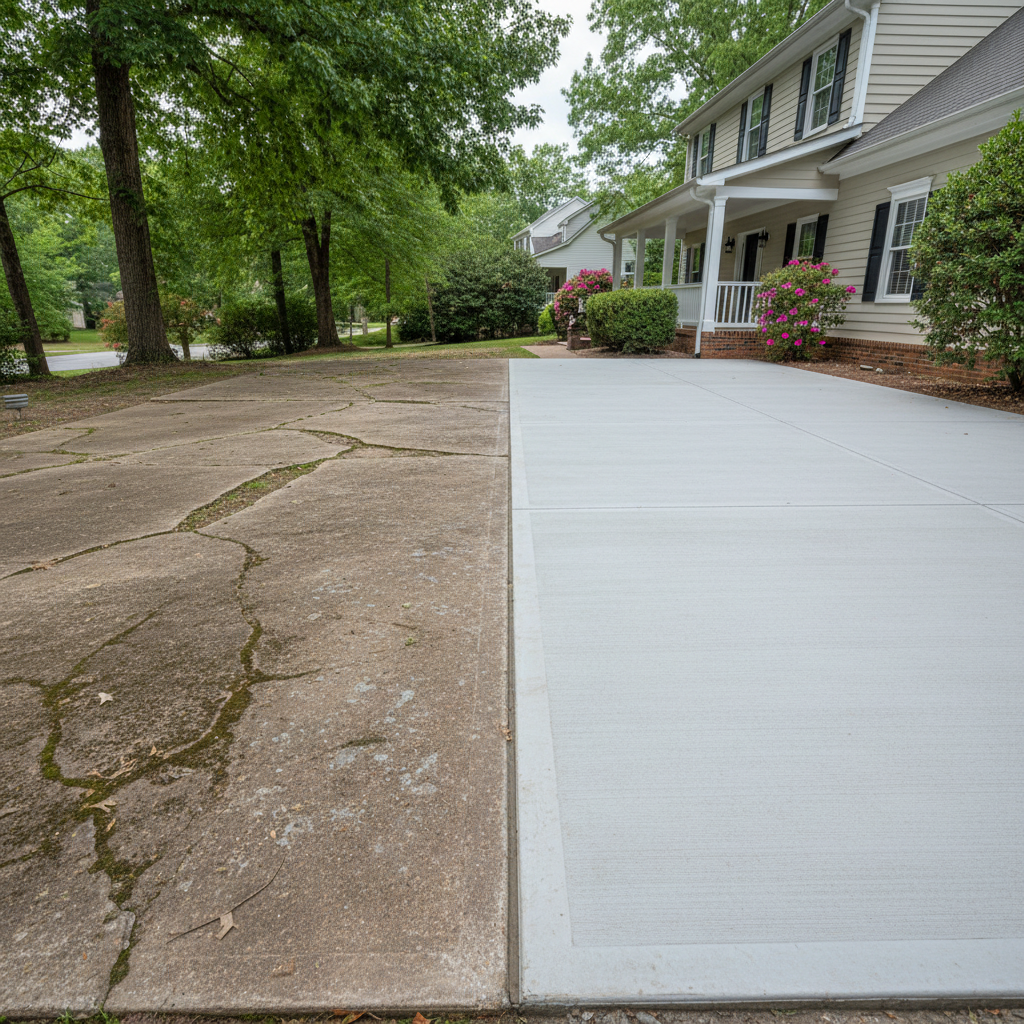
Your driveway or patio has seen better days. Between the heavy clay soils out near Kempsville and the brutal freeze-thaw cycles we get every winter, concrete around here takes a beating. You are left staring at cracks, surface spalling, or ugly discoloration, wondering what to do next. Do you tear the whole mess out, or can you just slap a new top layer on it and call it a day? Williams Stamped Concrete & Resurfacing breaks down how these two approaches actually stack up in the real world.
The Reality of Full Tear-Out and Replacement
Tearing out old concrete means starting from scratch. We bring in the heavy equipment, break up the old slab, haul away tons of rubble, and prep the sub-base all over again. It is loud, messy, and disruptive. But here is the big advantage: you get a completely clean slate. If your old driveway was sinking because the ground underneath was poorly compacted back when the subdivision was built, concrete resurfacing will not fix that. A full replacement lets us address drainage issues, fix sub-grade problems, and pour a thick, reinforced slab that will easily last another 30 years or more.
Cost-wise, demolition and replacement are undeniably higher. You are paying for labor-intensive demo, dump fees, and a whole lot of ready-mix concrete. If your base is completely shot or the slab is cracked into a dozen pieces, though, it is the only real fix. Williams Stamped Concrete & Resurfacing knows that putting a thin layer over a crumbling base is just throwing money away.
When Concrete Resurfacing Makes Sense
If your underlying slab is structurally sound—meaning it is not shifting, sinking, or crumbling into dust—Concrete Resurfacing is usually the smarter financial move. Modern polymer-modified overlays bond very well to existing concrete. We can patch minor cracks, smooth out rough patches, and then apply a decorative stamp or texture right over the top. It looks brand new, costs significantly less than a full replacement, and skips the nightmare of heavy demolition tearing up your front yard.
Williams Stamped Concrete & Resurfacing does a lot of overlay work for homeowners in neighborhoods like Great Neck who want to upgrade a dated gray patio or pool deck without the massive price tag of a total rebuild. You get a custom look—slate, tile, or flagstone patterns—at a fraction of the cost.
How Our Coastal Virginia Climate Plays a Role
Virginia Beach weather is tough on flatwork. We get high humidity, heavy summer downpours, and enough winter freezes to pop weak surfaces apart. If you choose Concrete Resurfacing, you are trusting the bond between the old concrete and the new overlay. If the old concrete has active moisture issues or salt damage, that overlay can delaminate within a few seasons. That is why prep work is everything. We acid-wash, grind, and test the surface carefully before putting anything down. If the slab is too far gone, Williams Stamped Concrete & Resurfacing will tell you straight up that a tear-out is required.
Making Your Final Call
Look at the damage closely. If the cracks are hairline and the slab is stable, save your landscaping and your wallet by going the Concrete Resurfacing route. If the panels are rocking when you walk on them, water is pooling toward your foundation, or the concrete is disintegrating, it is time to pour a new one. For homes and businesses in Virginia Beach, Williams Stamped Concrete & Resurfacing provides Concrete Resurfacing and replacement services that hold up for many years in the local climate.