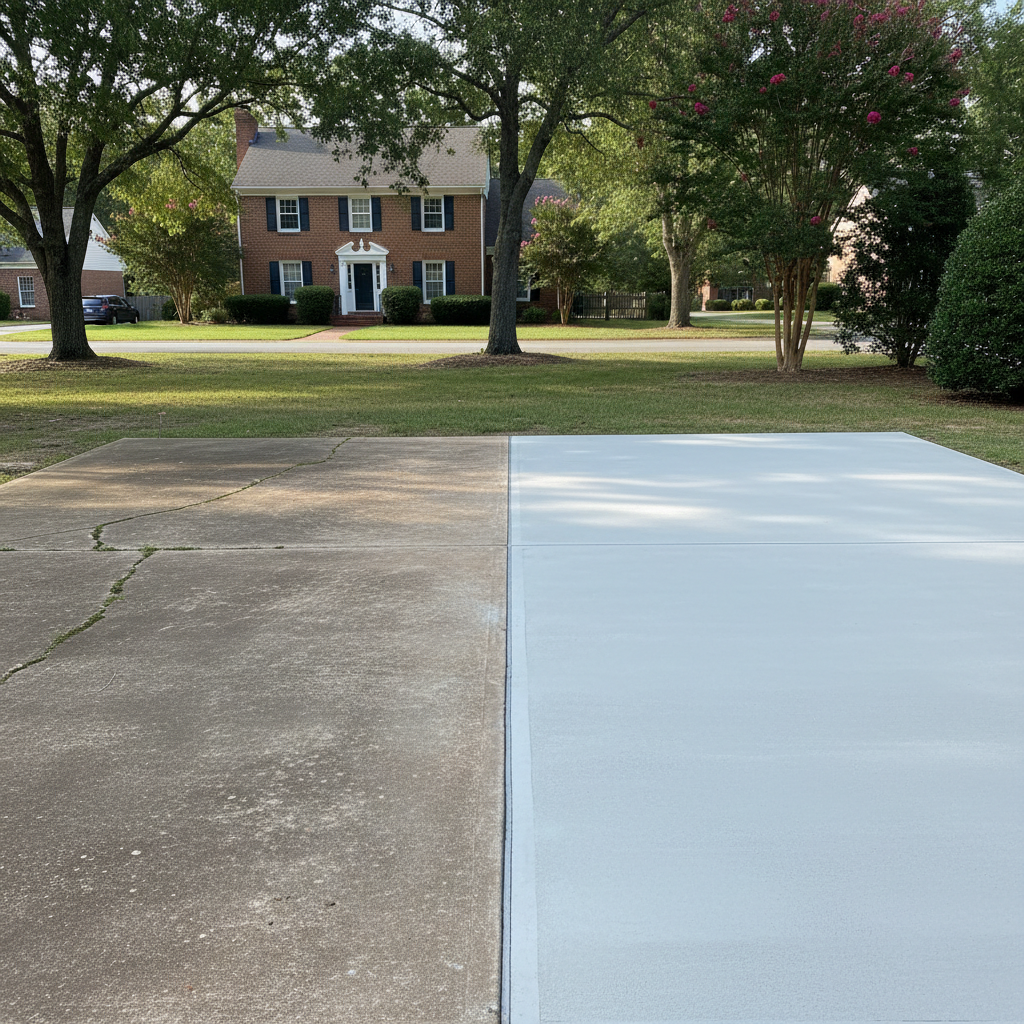
Homeowners in Virginia Beach often look at a cracked or worn concrete slab and decide it is time for an upgrade. Many property owners try to decide between pouring a custom stamped concrete patio or installing traditional pavers. Both options can transform an outdoor living space, but they behave very differently once they are put to the test right here in the Hampton Roads area.
The local environment in Virginia Beach plays a big role in how these materials perform. In neighborhoods near the oceanfront or over in Great Neck, the soil is mostly sandy, and the water table sits high. When heavy nor'easter storms blow in from the coast, moisture gets everywhere. That constant cycle of heavy rain, high humidity, and occasional winter freezes puts a serious beating on outdoor surfaces. How a new patio or driveway handles that weather depends entirely on the material you pick.
The Real Deal on Stamped Concrete
Stamped Concrete gives homeowners a continuous, solid surface. Williams Stamped Concrete & Resurfacing pours a high-strength concrete mix, presses custom texture mats into it while it is still workable, and colors it to mimic stone, slate, or brick. Because Stamped Concrete is one monolithic slab, weeds will not sprout up through your patio joints. That is a major benefit for anyone tired of pulling grass out of their walkways.
Upfront costs for Stamped Concrete usually beat out high-end pavers because you are paying for efficient installation and fewer labor hours. Plus, Williams Stamped Concrete & Resurfacing reinforces our flatwork properly to handle local ground movement. The main maintenance task you have to commit to is resealing every few years. Skip the sealer, and the hot Virginia sun will eventually dull the colors of your Stamped Concrete.
How Pavers Stack Up
Pavers are individual interlocking pieces made of concrete or clay. Pavers look fantastic right out of the box and offer endless design patterns. If the ground shifts—and our sandy coastal soil loves to shift—Pavers have built-in flexibility. Instead of cracking like a solid slab might, individual Pavers just move with the earth.
The downside is that Pavers installation takes longer, which drives up labor costs. Over time, those joints between the Pavers fill with dirt, and you will find yourself dealing with weeds, ants, and occasional sunken spots that need to be re-leveled. If a tree root pushes up a section, you have to pull up the Pavers, fix the base, and relay them.
Cost and Durability Face-Off
When you look at the bottom line, Stamped Concrete generally saves you money upfront compared to laying premium Pavers by hand. Durability-wise, both Stamped Concrete and Pavers will last for decades if they are installed right. A poorly poured slab will crack, and a poorly prepped Paver base will sink. Workmanship matters more than the material itself.
Appearance is mostly personal preference. Pavers give you a classic, textured look with deep shadow lines. Stamped Concrete offers smooth patterns that are much easier to keep clean with a quick spray from the garden hose.
My Recommendation for Local Yards
If you want maximum visual impact with lower ongoing maintenance, Stamped Concrete is a smart choice for homes in Virginia Beach. Stamped Concrete holds up exceptionally well against our coastal humidity, resists weed growth completely, and gives you high-end stone looks without the high-end price tag. Just make sure you hire Williams Stamped Concrete & Resurfacing for your Stamped Concrete project in Virginia Beach so your investment stays level and strong for years to come.